

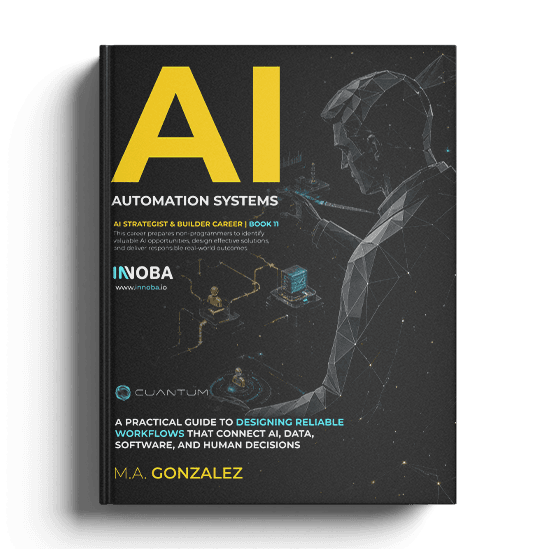
AI Automation Systems
381 pages | 5 parts | 16 chapters
Provide workflow architecture, integration, reliability, and operational design.
Explore the Book
Redesign business workflows around measurable value
Learn to analyze real operations, identify worthwhile automation opportunities, choose appropriate AI and agent roles, and prepare the system for responsible implementation.
Your professional outcome
Business automation begins with how work is actually performed. It includes exceptions, informal knowledge, handoffs, incentives, and human decisions that simple diagrams can hide.
Why this Path matters
A platform-first approach can preserve a broken process in technical form. Useful automation improves an operational outcome without making the work less understandable or accountable.
You are building the ability to define an intelligent business automation that fits the workflow, users, outcome, and operating reality.
What you learn
Map a process across people, information, systems, and decisions.
Identify bottlenecks, delays, inconsistency, and unmet needs.
Connect automation opportunities to organizational priorities and measurable value.
Define operational value and evidence.
Redesign the workflow before automating it.
Decide what should be eliminated, simplified, augmented, automated, or redesigned.
Choose rules, AI, agents, and human roles appropriately.
Incorporate governance, oversight, and accountability into the design.
Plan testing, rollout, ownership, adoption, monitoring, and improvement.
The Books in this Path
Build depth in each subject, then connect what you learn through Business Automation.
381 pages | 5 parts | 16 chapters
Provide workflow architecture, integration, reliability, and operational design.
Explore the Book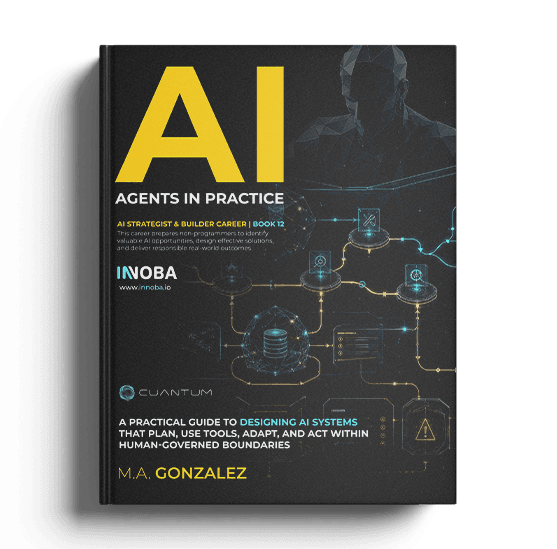
347 pages | 5 parts | 16 chapters
Add flexible AI actors for interpretation or multi-step work.
Explore the Book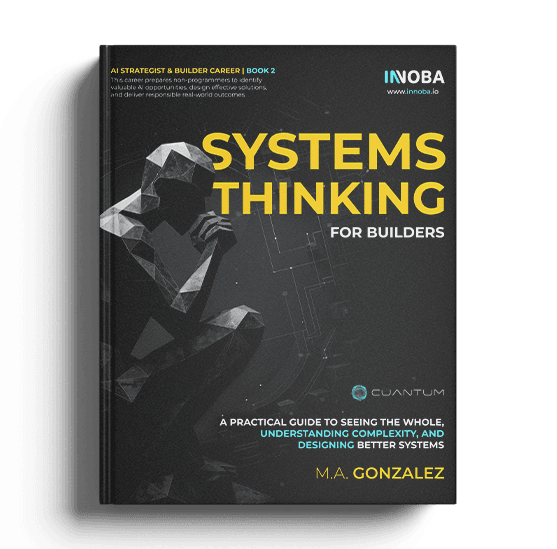
395 pages | 6 parts | 18 chapters
Reveal relationships, feedback, constraints, and unintended consequences.
Explore the Book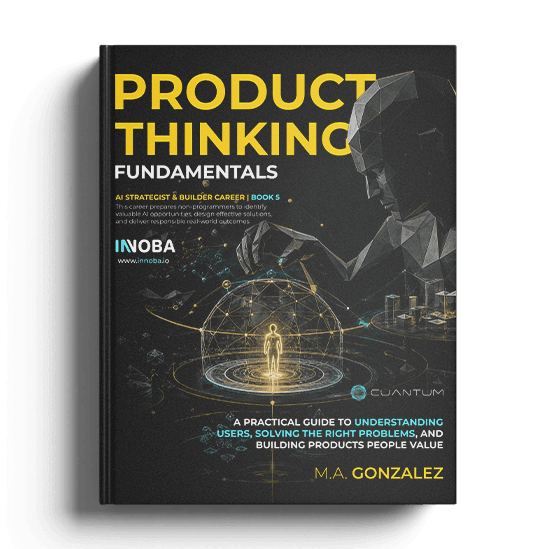
508 pages | 5 parts | 16 chapters
Center the automation on users, value, outcomes, assumptions, and evidence.
Explore the Book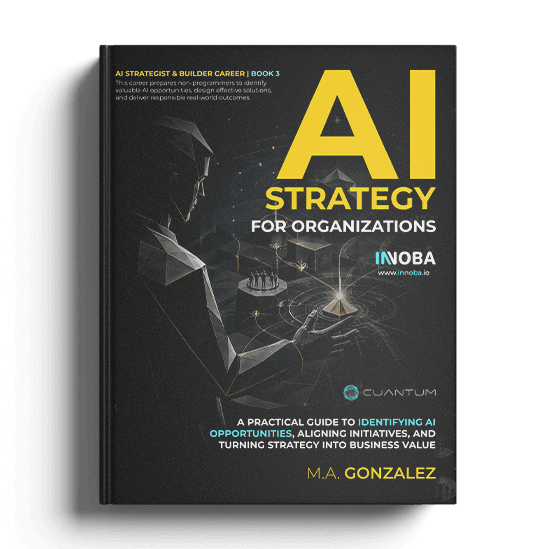
326 pages | 5 parts | 16 chapters
Connect the initiative to organizational priorities, readiness, and expected value.
Explore the Book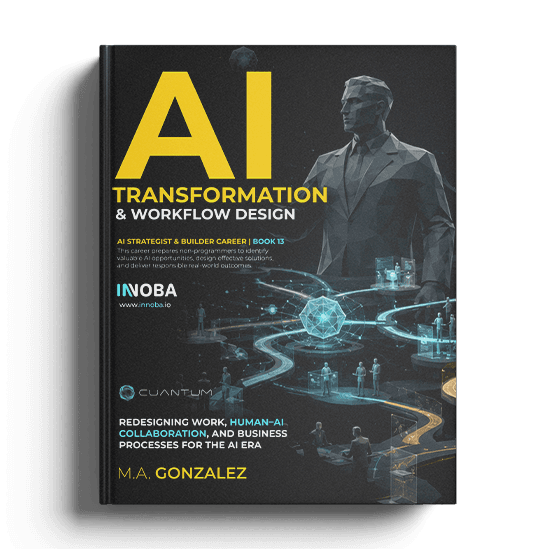
336 pages | 5 parts | 16 chapters
Redesign the complete workflow and surrounding roles before automating individual steps.
Explore the BookHow the Books connect
Systems thinking reveals the environment. Product thinking defines who benefits and why. AI strategy establishes why the initiative deserves attention. Automation Systems designs the flow. Agents add bounded intelligence. AI Transformation & Workflow Design prevents automation from preserving outdated work. The combined perspective keeps implementation connected to organizational value.
Who this Path is for
Business owners, operations specialists, consultants, managers, internal AI champions, and anyone responsible for efficiency or service quality.
Professional applications
Career connection
This Path integrates THINK, DESIGN, and AUTOMATE. It prepares LAUNCH through explicit implementation, ownership, adoption, and measurement concerns.
Explore the CareerYour transformation
You should be able to present a business automation with a clear strategic purpose, intended value, redesigned workflow, AI role, human responsibilities, governance needs, and plan for adoption and operation.
A clear progression from learning individual skills (books) to building complex abilities (learning paths and academies) and an entire career around them.
A group of books builds learning paths; a group of learning paths builds Academies; and a group of Academies builds the AI Strategist & Builder Career.
Learn a specific skill or topic
Achieve a specific goal
Master a specialty
Become an AI Strategist & Builder
43¢day