

Redesign before automating
Do not preserve unnecessary work through technology.
The Innoba Books
Design intelligent workflows that operate with visibility and control
Analyze work, redesign the process, choose appropriate roles for rules and AI, connect components, and improve the system through evidence.
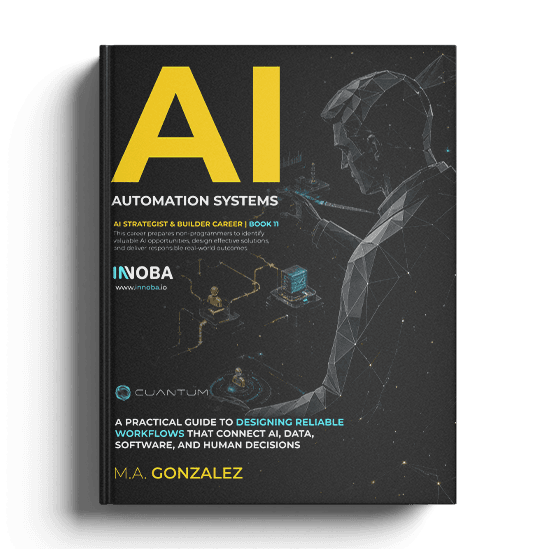
Inside this Book
Develop a connected understanding of AI Automation Systems, with the depth to revisit important ideas and apply them to your own work.
Included with all 15 Innoba Books in one membership for $12.90 a month.
Why this Book
This Book develops automation thinking at the system level. It helps you design around the intended outcome instead of beginning with a platform and searching for tasks.
Tool-first automation can reproduce a broken process, shift friction downstream, or hide errors. AI introduces variable behavior that requires evaluation, exception handling, and human oversight.
What you learn
How to map purpose, inputs, steps, decisions, handoffs, and outputs.
How to remove, simplify, standardize, augment, or automate work.
How deterministic rules differ from AI judgment.
How triggers, data, actions, and integrations form a system.
How to place review, approval, escalation, and fallback.
How to monitor outcomes and improve after implementation.
Explore the contents
Follow the ideas from their foundations into practice. Each part of AI Automation Systems develops a connected set of skills and decisions you can bring to your work.
Core ideas
Do not preserve unnecessary work through technology.
Conventional rules may be stronger than AI.
Variable behavior needs boundaries and monitoring.
Oversight and accountability are designed roles.
The workflow should reveal whether it improves the outcome.
Your capabilities
Who this Book is for
Operations specialists, consultants, business owners, managers, builders, freelancers, and professionals responsible for recurring work or process improvement.
Professional applications
Connected Learning Paths
Connect this Book with complementary capabilities and work toward a specific professional outcome.
reveals workflow opportunities.
forms the systems core.
provides the operating environment for agents.
connects recurring personal work.
drives organizational workflow design.
provides the operational backbone.
supports client solutions.
supports real organizational integration.
Career connection
Automation is both a builder capability and a major opportunity domain. The Book connects systems understanding with practical operational implementation.
Your transformation
You should be able to map and redesign a workflow, specify an intelligent automation, explain every role, place human controls, and define how the system will improve.
The complete collection
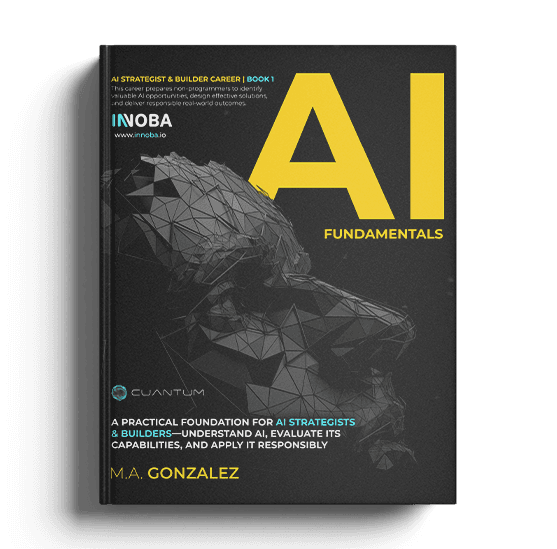
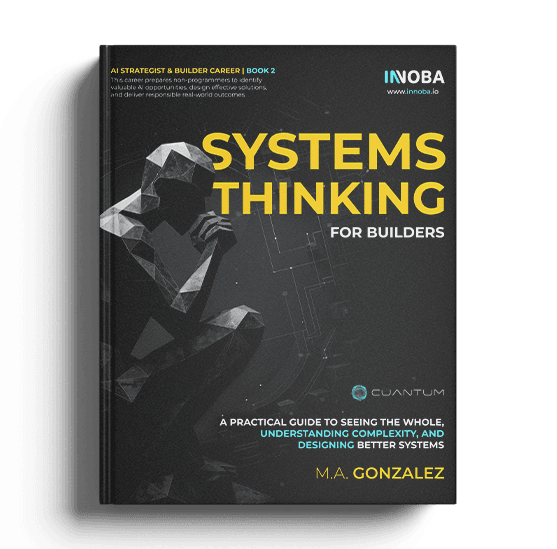
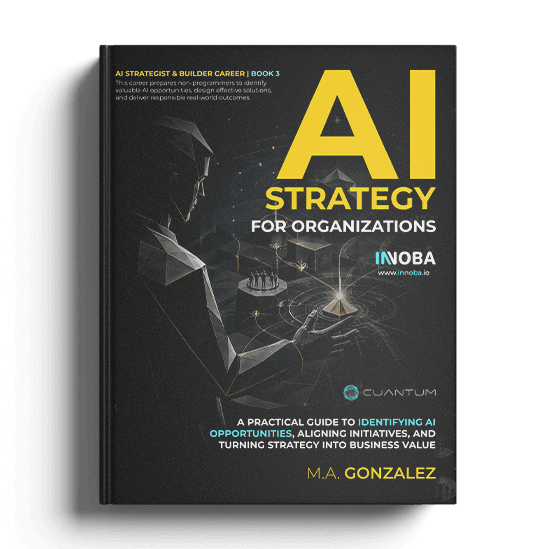
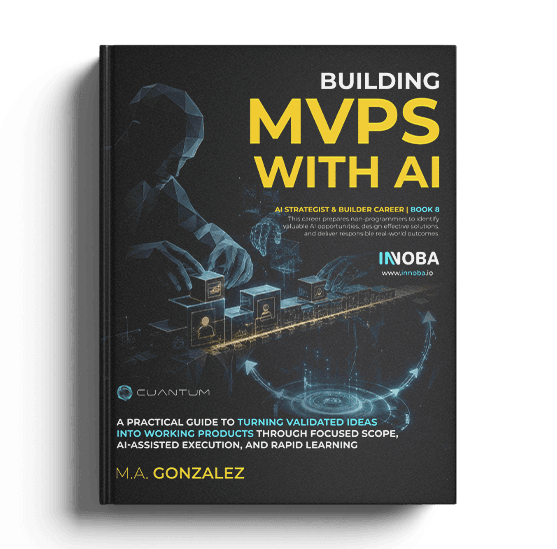
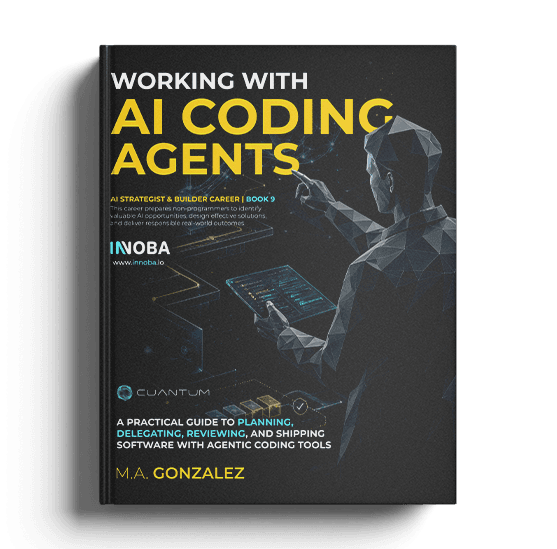
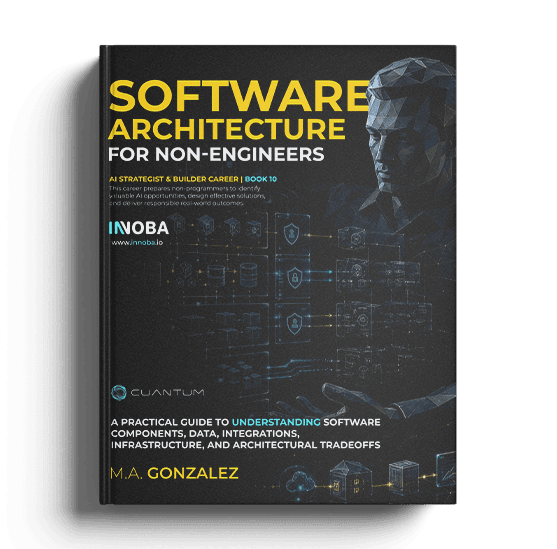
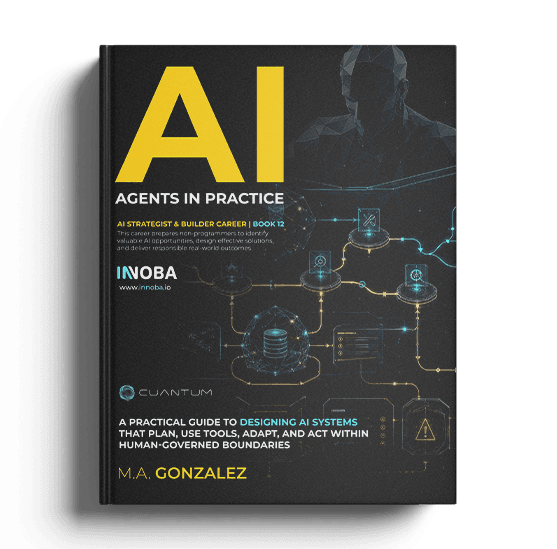
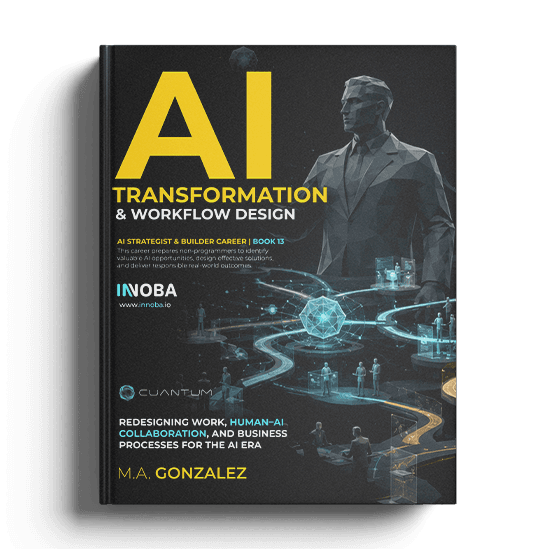
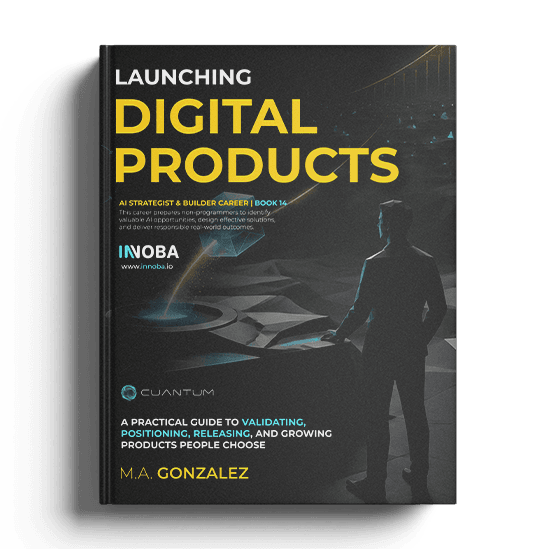
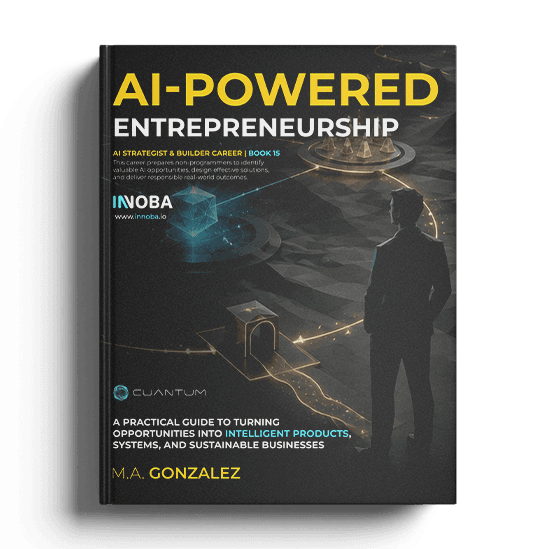
A clear progression from learning individual skills (books) to building complex abilities (learning paths and academies) and an entire career around them.
A group of books builds learning paths; a group of learning paths builds Academies; and a group of Academies builds the AI Strategist & Builder Career.
Learn a specific skill or topic
Achieve a specific goal
Master a specialty
Become an AI Strategist & Builder
43¢day