

Problem before solution
Understand the need before deciding what to build.
The Innoba Books
Decide what should be created by connecting problems, people, value, and evidence
Build a durable product-thinking foundation for AI products, internal tools, services, workflows, client solutions, and entrepreneurial ideas.
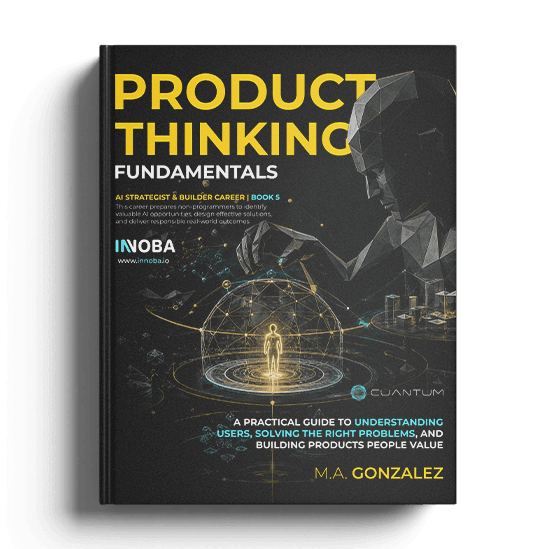
Inside this Book
Develop a connected understanding of Product Thinking Fundamentals, with the depth to revisit important ideas and apply them to your own work.
Included with all 15 Innoba Books in one membership for $12.90 a month.
Why this Book
Product Thinking Fundamentals helps you move from a feature idea to a reasoned product decision. It develops the ability to define the user, problem, intended value, important assumptions, and evidence required before broader investment.
AI can generate features quickly. It cannot decide whether those features solve a real problem or create a sustainable outcome. Without product judgment, teams can build technically functional artifacts that have little reason to exist.
What you learn
How to understand users and stakeholders in context.
How to frame problems without embedding an assumed solution.
How to define value and intended outcomes.
How to identify uncertainty and critical assumptions.
How to prioritize opportunities and scope.
How prototypes, MVPs, pilots, and feedback support learning.
How to revise direction when evidence changes.
Explore the contents
Follow the ideas from their foundations into practice. Each part of Product Thinking Fundamentals develops a connected set of skills and decisions you can bring to your work.
Core ideas
Understand the need before deciding what to build.
An outcome matters to specific people in a specific situation.
Make uncertain beliefs visible before investment.
Every release should improve understanding.
What you exclude can protect the learning objective.
Your capabilities
Who this Book is for
Product professionals, founders, consultants, designers, operations specialists, internal innovators, builders, and anyone deciding what an AI-enabled solution should do.
Professional applications
Connected Learning Paths
Connect this Book with complementary capabilities and work toward a specific professional outcome.
connects strategy with value.
helps prioritize opportunities.
forms the Path’s core.
defines assumptions and evidence.
guides integrated solution design.
maintains value through implementation.
connects release evidence with product decisions.
improves client scoping.
keeps internal work user-centered.
Career connection
Product thinking connects strategic opportunity with practical execution. It keeps every later build, automation, launch, or client engagement focused on value and evidence.
Your transformation
You should be able to frame the product problem, define users and value, expose uncertainty, prioritize learning, and make clearer decisions about what should be built.
The complete collection
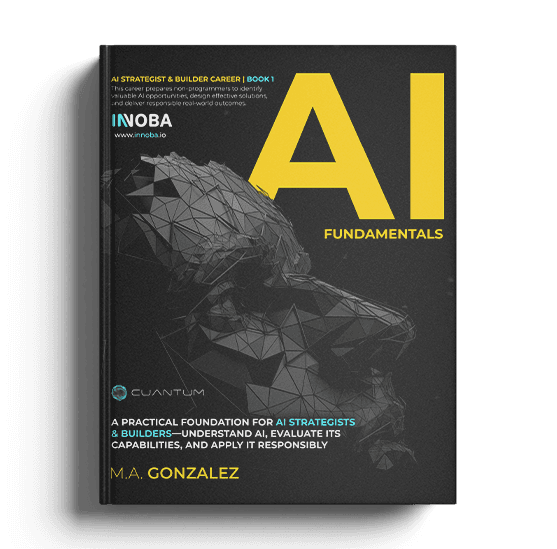
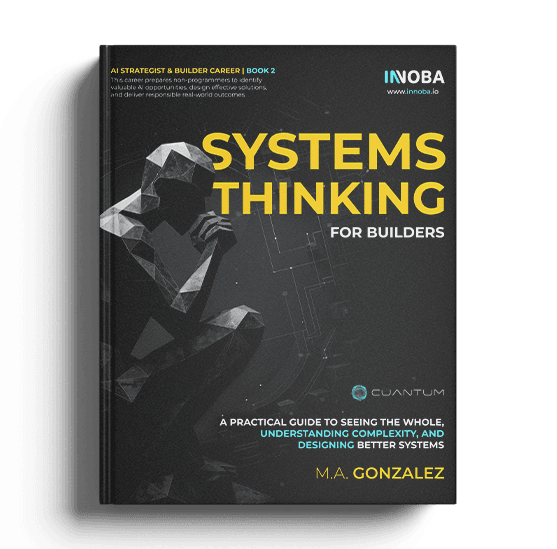
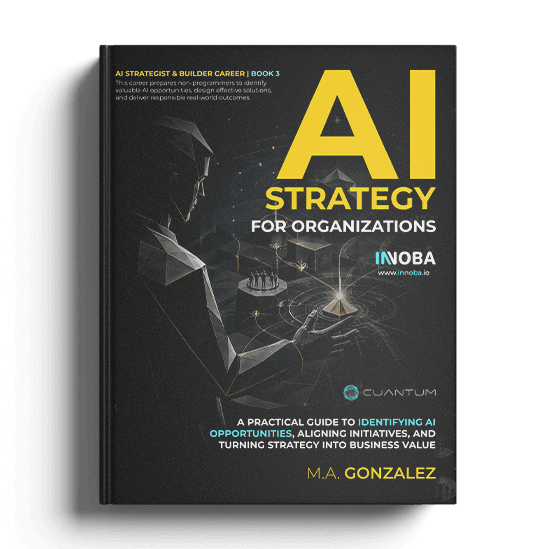
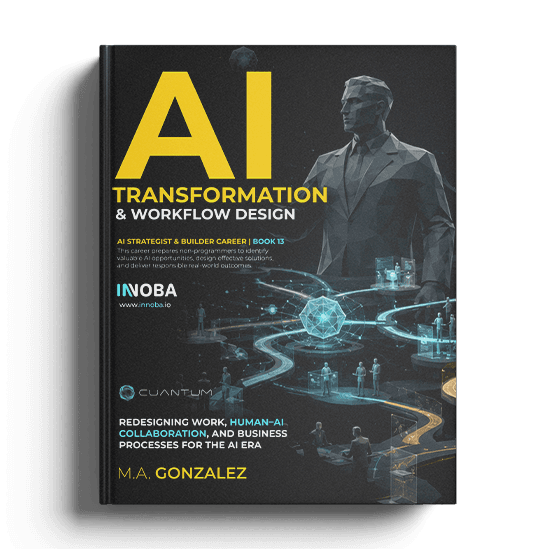
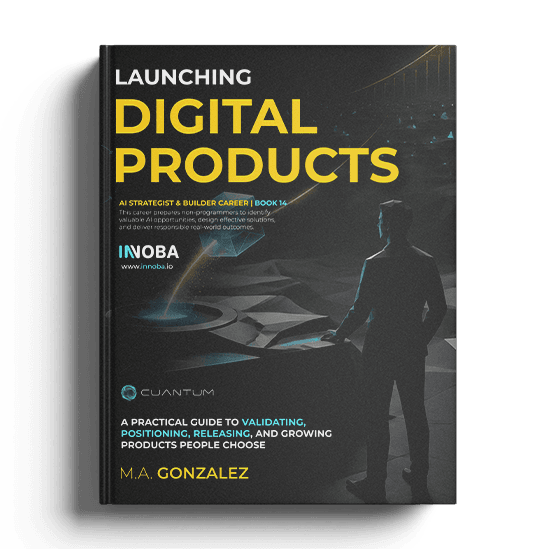
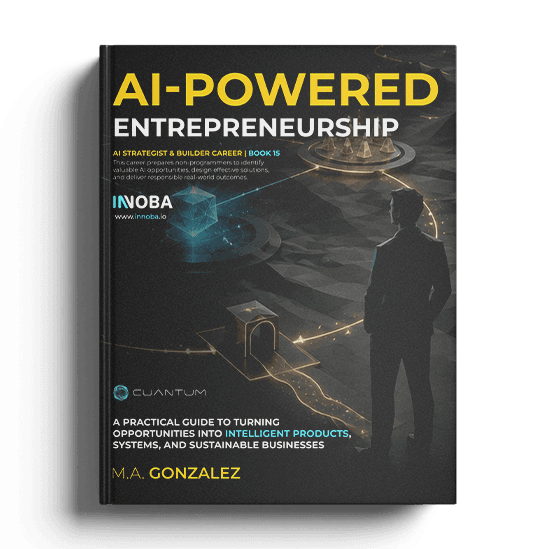
A clear progression from learning individual skills (books) to building complex abilities (learning paths and academies) and an entire career around them.
A group of books builds learning paths; a group of learning paths builds Academies; and a group of Academies builds the AI Strategist & Builder Career.
Learn a specific skill or topic
Achieve a specific goal
Master a specialty
Become an AI Strategist & Builder
43¢day