

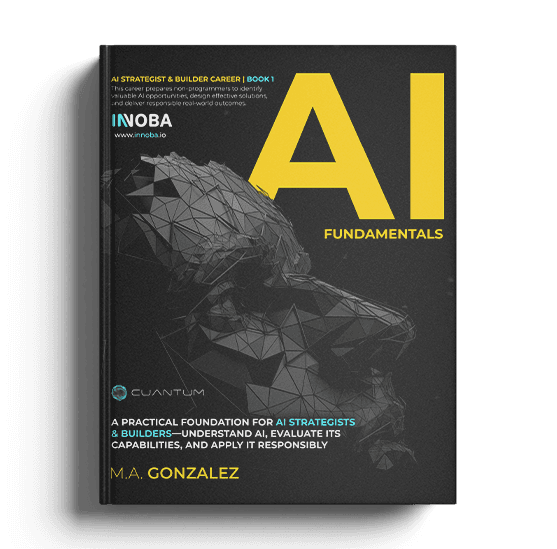
AI Fundamentals
407 pages | 6 parts | 18 chapters
Define what may be technically possible and where limitations matter.
Explore the Book
Recognize where AI can create value
Learn to discover, compare, and prioritize AI opportunities grounded in real needs, workflow realities, and measurable outcomes—not trend-driven enthusiasm.
Your professional outcome
This Path develops the strategic bridge from understanding AI to deciding where it deserves attention. You learn to observe work, find friction and unmet needs, match AI capability to the situation, and frame opportunities as hypotheses rather than promises.
Why this Path matters
Organizations can generate long lists of AI ideas without knowing which are valuable. Some solve minor inconveniences, ignore adoption, or introduce risk greater than the outcome. Opportunity thinking helps concentrate attention where learning and value are most promising.
You are building the ability to identify credible AI opportunities, compare them thoughtfully, and recommend a focused next step.
What you learn
Observe workflows for bottlenecks, repetition, information gaps, and decision challenges.
Map the wider system surrounding an opportunity.
Match AI capabilities to suitable task characteristics.
Distinguish augmentation, automation, product, and service opportunities.
Compare value, feasibility, organizational readiness, risk, adoption difficulty, and learning potential.
Distinguish an interesting use case from a strategically important initiative.
State the opportunity as a testable hypothesis.
Recommend a small validation step and define the evidence needed for prioritization.
The Books in this Path
Build depth in each subject, then connect what you learn through AI Opportunity Thinking.
407 pages | 6 parts | 18 chapters
Define what may be technically possible and where limitations matter.
Explore the Book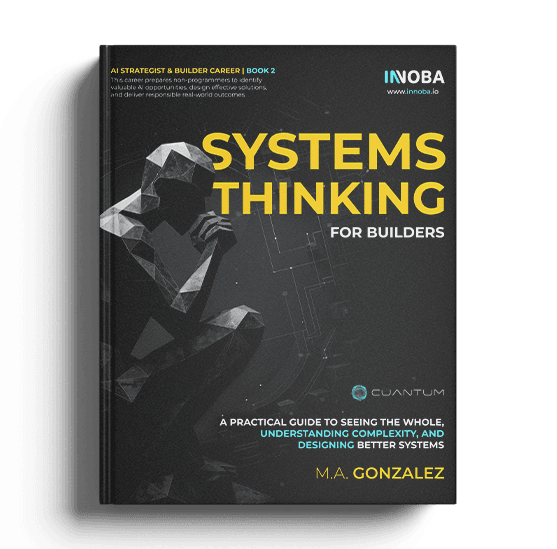
395 pages | 6 parts | 18 chapters
Reveal leverage, dependencies, feedback, and consequences.
Explore the Book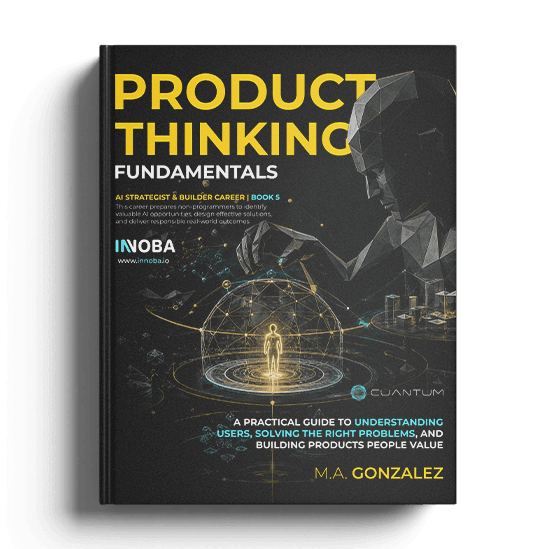
508 pages | 5 parts | 16 chapters
Center the opportunity on users, problems, value, and evidence.
Explore the Book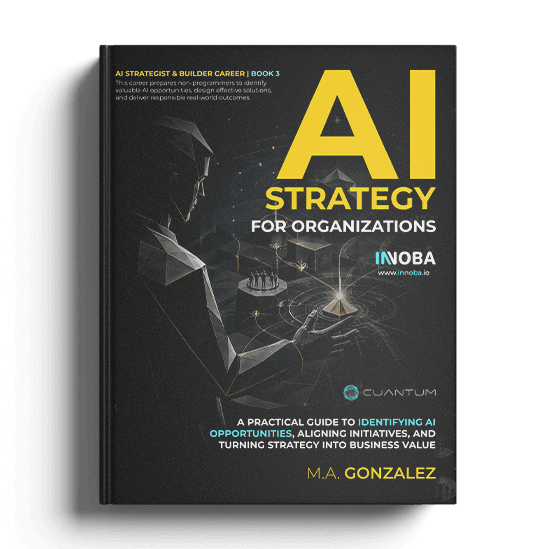
326 pages | 5 parts | 16 chapters
Add strategic fit, readiness, prioritization, business-case thinking, and roadmap logic.
Explore the Book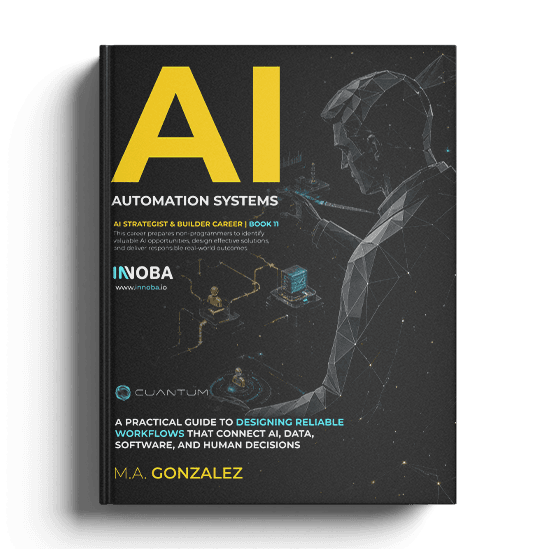
381 pages | 5 parts | 16 chapters
Recognize value inside recurring workflows and operational systems.
Explore the BookHow the Books connect
AI literacy explains possibility. Systems thinking reveals where change matters. Product thinking asks for whom and why. AI strategy turns discovery into prioritization and direction. Automation thinking shows how value may flow through repeated work. Together they turn ideas into a credible strategic opportunity portfolio.
Who this Path is for
This Path is designed for founders, consultants, business owners, managers, product and operations professionals, internal innovators, and anyone responsible for AI investment decisions.
Professional applications
Career connection
It connects THINK with action. It feeds DESIGN with better-framed opportunities, protects BUILD from purposeless projects, directs AUTOMATE toward worthwhile workflows, and gives LAUNCH a clearer value hypothesis.
Explore the CareerYour transformation
You should be able to explain why an AI opportunity matters, what readiness, risk, and constraints shape it, what assumptions remain, and what evidence-producing action should happen next.
A clear progression from learning individual skills (books) to building complex abilities (learning paths and academies) and an entire career around them.
A group of books builds learning paths; a group of learning paths builds Academies; and a group of Academies builds the AI Strategist & Builder Career.
Learn a specific skill or topic
Achieve a specific goal
Master a specialty
Become an AI Strategist & Builder
43¢day