

Architecture organizes responsibility
Each component should have a clear role.
The Innoba Books
Understand the software system you are helping create
Build practical architecture literacy for applications, data, APIs, authentication, integrations, deployment, and technical tradeoffs—without becoming a traditional engineer first.
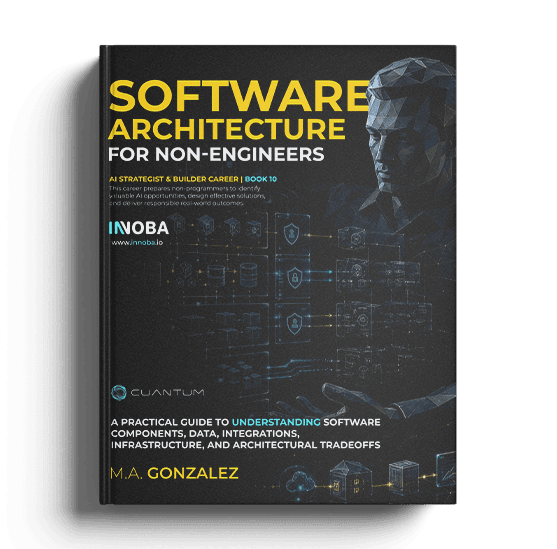
Inside this Book
Develop a connected understanding of Software Architecture for Non-Engineers, with the depth to revisit important ideas and apply them to your own work.
Included with all 15 Innoba Books in one membership for $12.90 a month.
Why this Book
This Book gives non-engineers a conceptual map of software. The goal is not to reproduce an engineering degree. It is to make AI-assisted building and technical collaboration understandable enough for informed decisions.
Generated software can feel like an opaque object. If you do not know how its parts fit together, you may miss important questions about data, access, dependencies, cost, reliability, security, or maintenance.
What you learn
The roles of front ends, back ends, data stores, APIs, and external services.
How user actions and information move through an application.
How authentication and authorization differ conceptually.
How integrations create capability and dependency.
Why deployment, reliability, privacy, security, cost, and maintenance matter.
How to compare architecture choices according to scope.
Explore the contents
Follow the ideas from their foundations into practice. Each part of Software Architecture for Non-Engineers develops a connected set of skills and decisions you can bring to your work.
Core ideas
Each component should have a clear role.
Collection, storage, access, movement, and deletion require decisions.
APIs and boundaries shape dependencies.
The simplest suitable design is often stronger than unnecessary complexity.
Reliability and security cannot be added carelessly at the end.
Your capabilities
Who this Book is for
Non-engineers who build with AI, manage products, commission software, collaborate with technical teams, evaluate solutions, or advise clients.
Professional applications
Connected Learning Paths
Connect this Book with complementary capabilities and work toward a specific professional outcome.
Career connection
The AI Strategist & Builder does not need to write every line manually, but needs enough architecture knowledge to make informed choices and supervise AI-generated work responsibly.
Your transformation
You should be able to explain the application’s main structure, trace important data and actions, compare tradeoffs, and know when deeper engineering or security expertise is necessary.
The complete collection
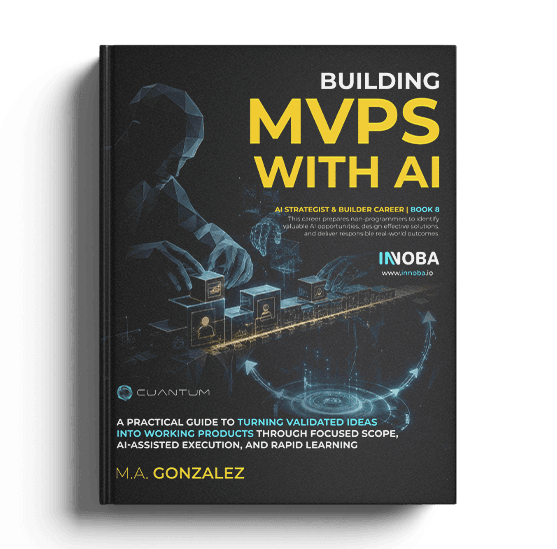
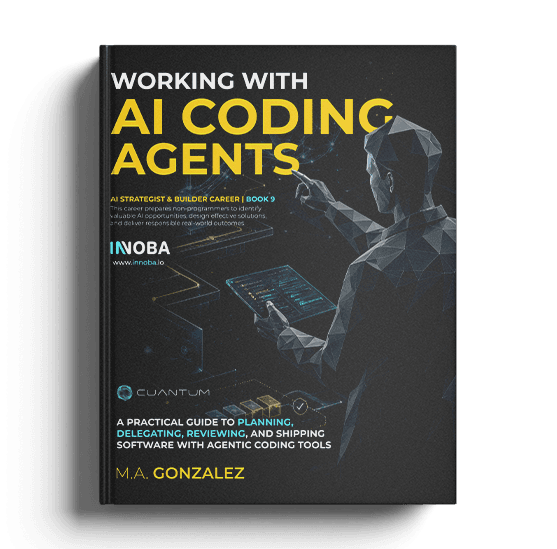
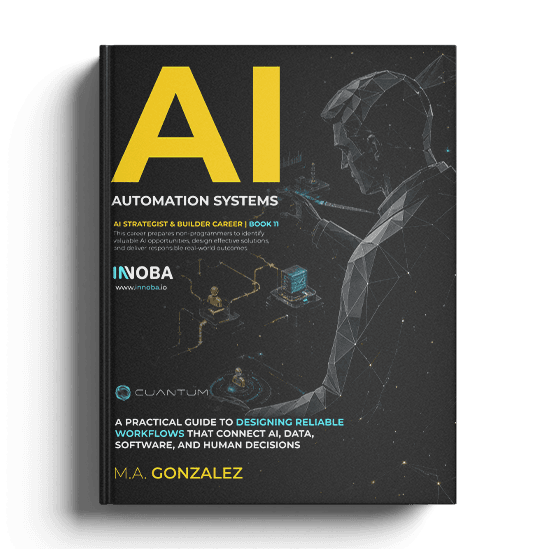
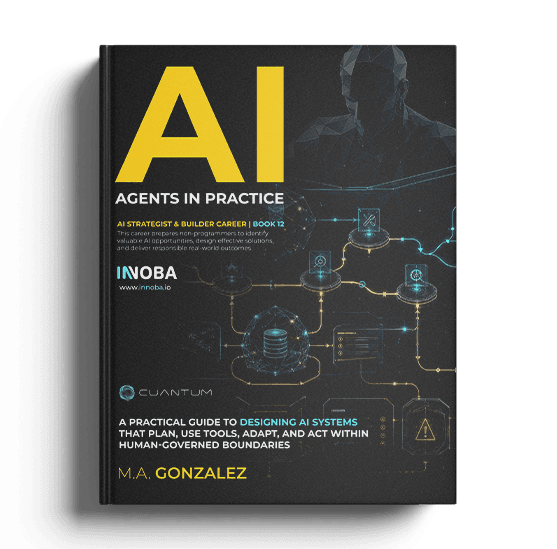
A clear progression from learning individual skills (books) to building complex abilities (learning paths and academies) and an entire career around them.
A group of books builds learning paths; a group of learning paths builds Academies; and a group of Academies builds the AI Strategist & Builder Career.
Learn a specific skill or topic
Achieve a specific goal
Master a specialty
Become an AI Strategist & Builder
43¢day