

Agency is bounded
An agent should act inside explicit permissions and scope.
The Innoba Books
Create goal-directed AI agents without losing accountability
Understand agent roles, goals, context, tools, memory, permissions, action, evaluation, orchestration, and human oversight in practical systems.
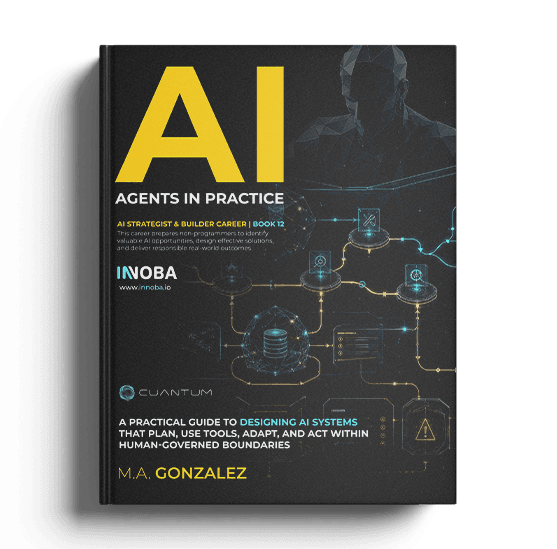
Inside this Book
Develop a connected understanding of AI Agents in Practice, with the depth to revisit important ideas and apply them to your own work.
Included with all 15 Innoba Books in one membership for $12.90 a month.
Why this Book
This Book offers a grounded alternative to describing agents as autonomous digital workers. It focuses on what an agent needs to be useful, bounded, visible, and responsible.
Agents can take several actions and therefore magnify both helpful work and mistakes. Without defined permissions, checkpoints, evaluation, and failure behavior, agentic systems can create operational or data risk.
What you learn
What distinguishes an agent from a single response or fixed automation.
How to define goals, roles, inputs, outputs, tools, and limits.
How context, memory, state, and planning affect behavior.
How to orchestrate steps or specialized agents.
How to place approval, escalation, fallback, and stop conditions.
How to test success, ambiguity, and failure.
How agents fit products and workflows.
Explore the contents
Follow the ideas from their foundations into practice. Each part of AI Agents in Practice develops a connected set of skills and decisions you can bring to your work.
Core ideas
An agent should act inside explicit permissions and scope.
Completion and quality must be defined.
System and data access require control.
Multi-step work should remain inspectable.
Delegation does not transfer responsibility.
Your capabilities
Who this Book is for
Automation specialists, builders, consultants, operations and product professionals, and learners who already understand foundational AI and workflow concepts.
Professional applications
Connected Learning Paths
Connect this Book with complementary capabilities and work toward a specific professional outcome.
adds adaptable behavior.
forms the conceptual core.
supports bounded personal delegation.
adds agents to operations.
supports orchestration and control.
supports responsible client work.
supports bounded deployment.
Career connection
Agents extend the builder identity while demanding strategic judgment. You must know when agency adds value, how it fits the system, and what responsibility remains human.
Your transformation
You should be able to specify a useful agent, define its tools and boundaries, place it inside a workflow, plan evaluation and oversight, and explain when it is appropriate.
The complete collection
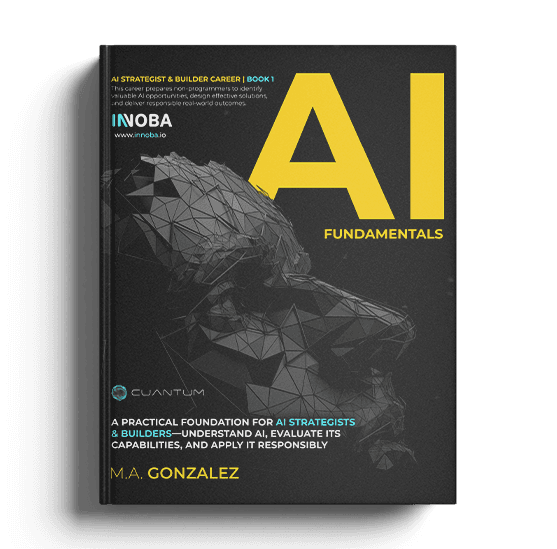
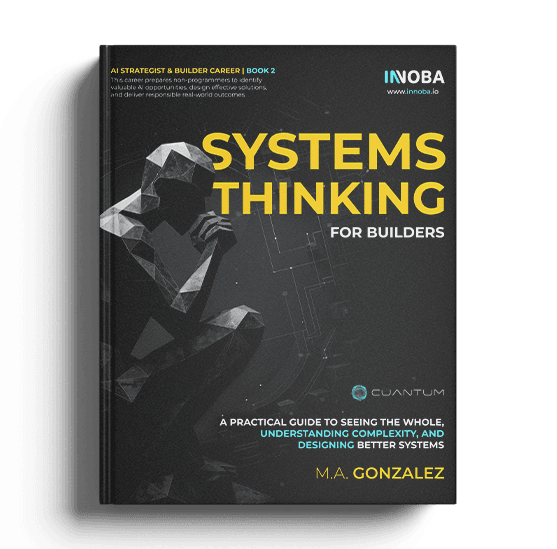
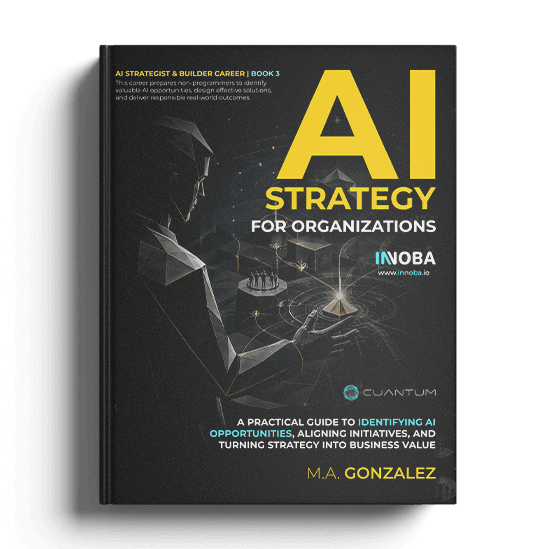
A clear progression from learning individual skills (books) to building complex abilities (learning paths and academies) and an entire career around them.
A group of books builds learning paths; a group of learning paths builds Academies; and a group of Academies builds the AI Strategist & Builder Career.
Learn a specific skill or topic
Achieve a specific goal
Master a specialty
Become an AI Strategist & Builder
43¢day